

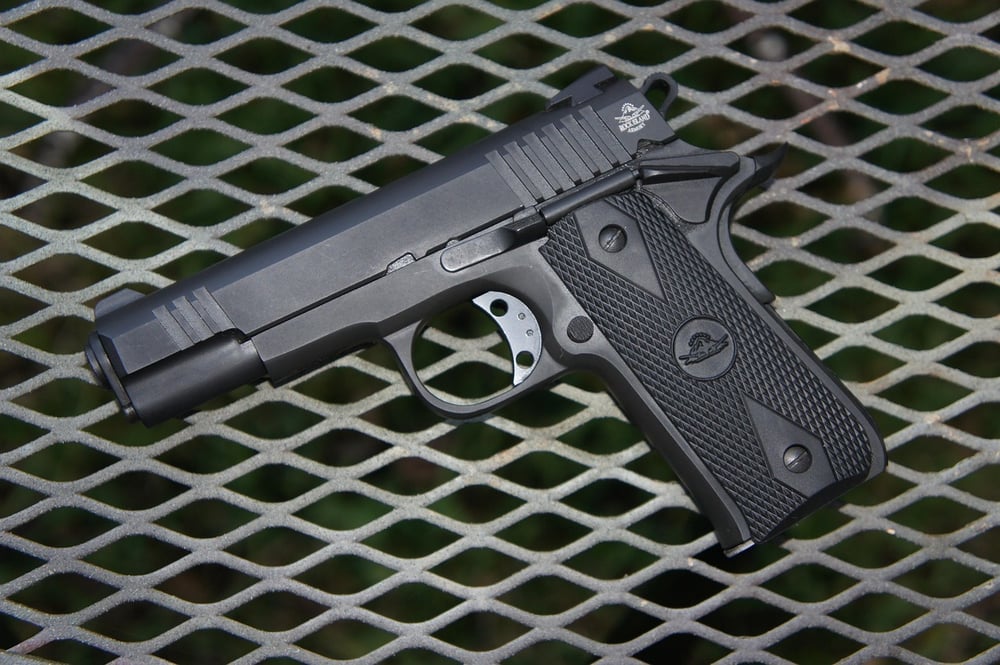
The short answer is that it is possible to go to jail for accidentally shooting someone in Dane County, but whether Wisconsin law considers what happened an innocent accident or a crime comes down to a specific legal standard.
The key question may be whether the conduct met the definition of “criminal negligence” under Wis. Stat. § 939.25. That is a real element the State has to prove beyond a reasonable doubt. In this post, we’ll explore what criminal negligence actually means in greater detail, the circumstances that usually lead to greater or lesser penalties, and next steps.
Where Wisconsin Draws the Line on Criminal Negligence
The key to determining criminal negligence is whether the defendant should have realized that what they were doing created a substantial and unreasonable risk of death or great bodily harm.
That phrasing comes straight from Wis. Stat. § 939.25, which defines criminal negligence as ordinary negligence to a high degree: conduct the actor should realize creates a substantial and unreasonable risk of death or great bodily harm to another.
This means intent isn’t required for something to be considered “criminal negligence.”
But ordinary carelessness isn't enough either. The statute requires negligence to a high degree. Wisconsin Criminal Jury Instruction 925 makes both halves explicit: the conduct must create a risk not merely of some harm but of death or great bodily harm, and that risk must be both unreasonable and substantial.
The Charges That Can Arise
When the person was injured
Under Wis. Stat. § 940.24(1), causing bodily harm to another by the negligent operation or handling of a dangerous weapon, explosives, or fire is a Class I felony, according to Wis. Stat. § 939.50(3)(i). Penalties can include a fine of up to $10,000 and/or up to 3 years and 6 months of imprisonment. However, keep in mind that a statutory maximum is a ceiling, not a prediction. Actual outcomes in Dane County depend on the facts, the person's record, and how the case is litigated.
Wisconsin Criminal Jury Instruction 1260 lists the three elements the State must prove beyond a reasonable doubt:
-
The defendant operated or handled a dangerous weapon.
-
The defendant did so in a manner constituting criminal negligence.
-
That handling caused bodily harm to the victim.
Two definitions in that instruction shape how the elements play out. "Cause" means that criminal negligence by the defendant was a substantial factor in producing the bodily harm. And "bodily harm" is defined broadly — physical pain or injury, illness, or any impairment of physical condition.
The statute also contains an exception at subsection (3) for health care providers acting within the scope of their practice or employment.
When the person died
Wis. Stat. § 940.08(1) makes causing a death by the negligent operation or handling of a dangerous weapon a Class G felony. Penalties can include a fine of up to $25,000, up to 10 years of imprisonment, or both, under § 939.50(3)(g). That said, the fact that someone died is not necessarily enough to prove negligence.
The Wisconsin Supreme Court set out the elements in State v. Langlois, 2018 WI 73, 382 Wis. 2d 414, 913 N.W.2d 812: the State must prove beyond a reasonable doubt that:
-
The defendant operated or handled a dangerous weapon.
-
The defendant did so in a manner constituting criminal negligence.
-
That the criminally negligent operation or handling caused another human being's death.
The statute also contains a health care provider exception at subsection (3), parallel to the one in § 940.24.
When a child obtained the firearm
Wis. Stat. § 948.55 addresses recklessly storing or leaving a loaded firearm within the reach or easy access of a child under 14, where the child obtains it without permission and the discharge causes bodily harm or death.
Read subsection (4) alongside it. The statute expressly does not apply in a number of situations, including when the firearm was stored in a securely locked box or container, when the child obtained it as a result of an illegal entry by any person, when the person who stored the firearm reasonably believed a child was not likely to be present, and when the firearm was rendered inoperable by removing an essential component of the firing mechanism such as the bolt.
Charges Filed Are Not Charges Proven
Attorney Patrick J. Stangl has rigorously defended Wisconsin clients for more than 35 years, including homicides and cases involving firearms. Every case is different and no outcome can be guaranteed, but a careful, well-developed defense can result in reduced or even dropped charges. Read Stangl’s record of victories and messages from grateful clients.
Homicide Defense Success Story
Attorney Stangl defended a client charged with homicide by intoxicated use of a motor vehicle and homicide by operation of a motor vehicle with a prohibited alcohol concentration charge. A young man was killed as a result of the accident. As a result of the defense he raised the homicide charges were dismissed and an amended charging document was filed alleging less serious charges.
Talk To Attorney Stangl About Your Situation
There's no obligation and no cost to an initial conversation. If you or someone close to you has been involved in an accidental shooting in Dane County, Attorney Stangl offers a free 10-minute consultation to discuss the specifics and help you understand your options.
Local: (608) 831-9200 | Toll Free: (800) 353-2120


Stangl Law Offices, S.C.