


In this guide:
Most people hire an OWI lawyer more or less the same way: They search, they scan a few pages of testimonials, and they call whoever looks reassuring.
That works out sometimes. It works out more often when you know what you are actually screening for. Here is how to think about the decision, in the order the decisions come at you.
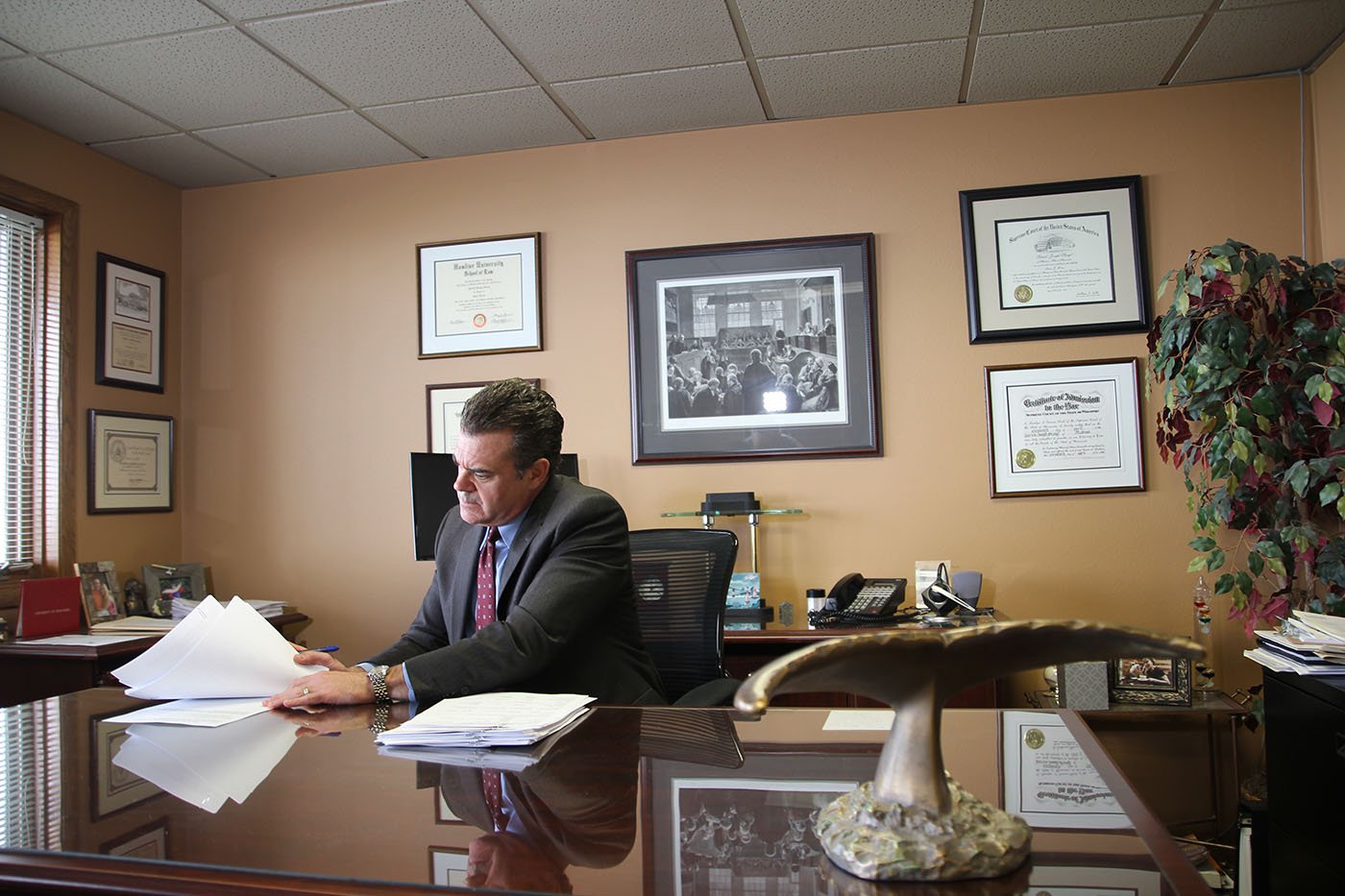 Attorney Patrick Stangl
We can't overstate how important it is to get in touch with an attorney if you're reading this guide and trying to answer this question. If you were arrested recently, the deadline that protects your license runs on a much shorter clock than your court date. Contact Stangl Law for a free 10-minute consultation before that window closes.
In the short video below, I explain what a first OWI offense is in Wisconsin.
1. Start With the Calendar
An OWI arrest in Madison starts two cases. One is the ticket or the criminal charge. The other is an administrative action against your license that runs on a separate track and a much shorter clock.
If your test came back over the limit, you were handed a notice of intent to suspend. You have ten days to request administrative review under Wis. Stat. § 343.305.
If you refused the test, a separate revocation starts, with its own ten-day hearing request. And if you want a jury instead of Judge Koval deciding your case alone, Madison Municipal Court gives you ten days from your not-guilty plea to file the demand and pay the fee.
All three windows close before a typical first court date. Whoever you hire needs to be hired inside the first week, not the week before court.
Attorney Pat Stangl offers a free 10-minute consultation with no obligation, and the point of it is speed. It exists so you can find out in one phone call which deadlines are already running against you, so you can act fast.

2. Match the Lawyer to the Courtroom Your Case is Actually In
A Madison OWI can land in one of two very different places.
-
A first offense OWI written by a Madison police officer goes to Madison Municipal Court, in the City-County Building at 210 Martin Luther King Jr. Blvd. It is a civil violation. There is no jury, and the court will not appoint you a lawyer, because municipal cases are not criminal charges.
-
A second offense OWI within ten years, or any felony, goes to Dane County Circuit Court at 215 S. Hamilton Street, prosecuted by the Dane County District Attorney's office. That is a criminal case with a criminal record attached to the outcome. Different building, different prosecutors, different rules.
Ask any lawyer you interview how many cases they have handled in the specific court yours is in, within the past year. Familiarity with the room is not a small thing.
Stangl Law has practiced in both of these courts since 1991. The firm's office is on Odana Road in Madison, roughly fifteen minutes from either courthouse. These are not courts Attorney Stangl visits occasionally. They are the courts he works in day in and day out.
3. Find Out Whether They Actually Defend OWIs
Plenty of competent general practice attorneys will take your OWI. Impaired driving defense is its own technical field, and the difference shows up in what a lawyer asks for.
A specialist requests the calibration and maintenance logs for the Intoximeter EC/IR II. They know that Wisconsin's blood work goes to the State Laboratory of Hygiene and what to do with a chain of custody. They know the officer scored your roadside tests against a written NHTSA protocol, which means the protocol can be checked against what the squad video shows.
If you hear only general reassurance in a consultation and no mention of records, testing, or procedure, keep calling.
Attorney Stangl has completed the same NHTSA-sponsored field sobriety testing course that law enforcement officers take. He evaluates the roadside testing against the standard the officer was trained to follow, rather than taking the officer's conclusion at face value.
4. Ask Whether They Prepare for Trial or Prepare to Plead
This is the question that separates two philosophies of defense, and lawyers will tell you which one they hold if you ask directly.
Some attorneys treat a plea as the default and negotiate from there. The problem is structural: a lawyer who never expects to try the case has very little leverage to negotiate with, and prosecutors know which lawyers those are.
Ask when they last tried an OWI to verdict in Dane County. Ask what would have to be true for them to take your case to trial.
Attorney Stangl prepares every drunk driving case for trial. His stated position is that unless the State offers a plea agreement clearly better than the risk of losing at trial, there is no reason to plead guilty. That preparation is also what makes a favorable negotiation possible.

5. Test Them on Prior Offenses
If you have any prior OWI-related conviction, this is where your case is most likely to be won or lost, and most people never think to ask about it.
Whether your case is charged as a second offense turns on the dates of the prior violation. At a third offense, the ten-year lookback disappears entirely and every qualifying prior counts, going back decades and across state lines. Striking one prior can move a case down a full tier and erase a mandatory minimum jail sentence.
Ask how they would analyze an out-of-state conviction. A lawyer who has done this work will start talking about whether you were represented, and whether you were properly advised of your right to counsel.
In one Dane County case, Attorney Stangl moved a client from a felony fifth offense to a first offense civil ordinance violation. The client had several Minnesota priors from cases where he had not been represented. Investigation established that in four of them he was never properly advised of his right to appointed counsel, making those convictions constitutionally defective under the Sixth Amendment. The State conceded the four priors could not be counted. Results depend on the facts of each case.
6. Verify the credentials yourself, in about ten minutes
Two free databases answer most of the questions a testimonial page cannot.
WisBar Lawyer Search confirms an active Wisconsin license. The Office of Lawyer Regulation, an agency of the Wisconsin Supreme Court, publishes public disciplinary histories. Neither costs anything and neither asks who you are.
Then read the badges carefully. Peer-selected listings like Super Lawyers and The National Trial Lawyers reflect the judgment of other attorneys, which is worth something. Directory rankings with names like "Top 10" or "3 Best" are often paid placements.
And board certification in DUI Defense Law from the National College for DUI Defense is the narrowest credential in the field, held by roughly 45 attorneys nationally, so it is worth asking whether a lawyer is an NCDD member or NCDD board certified.
The recognitions are checkable, and here is where to check them. The National Trial Lawyers has named Attorney Stangl among the top 100 trial attorneys in Wisconsin every year since 2012. Super Lawyers selected him each year from 2020 through 2025. He has argued before the Wisconsin Supreme Court and the U.S. Court of Appeals for the Seventh Circuit.
A Few Key Questions to Ask a Madison OWI Attorney
- How many OWI cases have you handled in Madison Municipal Court and Dane County Circuit Court in the past year?
- Have you tried an OWI to verdict in Dane County? When?
- Have I already missed the administrative review deadline, and if not, when will you file?
- Do you subpoena calibration and maintenance records for the breath instrument in every case?
- My blood went to the State Laboratory of Hygiene. What do you do with a blood case that you don't do with a breath case?
- I have a prior from another state. Walk me through how you'd analyze whether it counts.
- Should I keep this in municipal court or demand a jury in circuit court, and what does that decision turn on?
- What is your fee, what does it cover, and what is billed separately?
- Who actually appears at my hearings, you or someone else?
Two Recent Documented Dane County OWI Outcomes
-
An OWI accident in Madison. A client had a vehicle accident in the City of Madison and registered a .14 breath test. Nobody was hurt. He was charged with OWI and PAC as a first offense and was ready to put the matter behind him. Continued investigation turned up a failure to comply with the technical requirements for reading the Informing the Accused, which must be given before any chemical test of blood, breath, or urine. The OWI was amended to reckless driving and the PAC charge was dismissed.
-
State of Wisconsin v. R.T. The client faced a felony fifth offense with a high alcohol concentration and likely prison. He had several prior convictions from Minnesota where he had not been represented. Investigation established that in four of those cases he had not been properly advised of his right to appointed counsel or how an attorney might have helped him, making the convictions constitutionally defective under the Sixth Amendment. The State conceded those four priors could not be counted, and the case was amended from a criminal fifth offense to a first offense civil ordinance violation.
Results depend on the facts of each case, and past outcomes do not predict future ones.
Talk to an Experienced Madison OWI Attorney Today
Attorney Patrick J. Stangl has defended OWI charges in Wisconsin courts, state and federal, since 1991. His office is on Odana Road in Madison, and these are the courts, judges, and agencies he works in front of constantly. He has completed the same NHTSA-sponsored field sobriety testing training law enforcement receives, and he prepares drunk driving cases for trial rather than treating a plea as the default.
In the video below, I introduce myself and my practice.
Most of what changes an OWI outcome happens before your court date: the administrative hearing that protects your license, the discovery of calibration and maintenance records, the motions to suppress evidence obtained improperly, and the prior-offense analysis that can drop a charge an entire tier.
That work starts with a conversation, and the first one is free.
Madison OWI Attorney Patrick J. Stangl, is committed to exploring options for your best defense and has defended clients across the state since 1991. To this end, he is pleased to offer a FREE 10-minute consultation at no obligation to discuss the specifics of your case and take the first step in putting this stressful time behind you.
Related Reading
- The Common Penalties for OWI in Madison, Wisconsin
- OWI Sentencing Guidelines in Dane County, Wisconsin
- First Offense OWI/DUI in Dane County: A Complete Guide
- Who is the best DUI/OWI attorney in Wisconsin? (statewide, including the full field sobriety, breath testing, and defenses FAQ)

Stangl Law Offices, S.C.